Virtual reality helps children for King’s MRI scans


A virtual reality app has been created to reassure children before they have an MRI scan at a London trust.
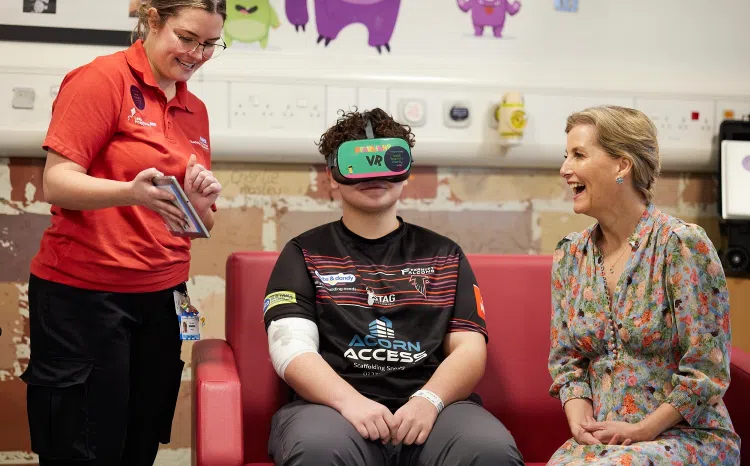
King’s College Hospital NHS Foundation Trust has developed ‘My MRI at Kings’, a panoramic 360 degree video that can be viewed on a virtual reality headset, mobile phone or tablet.
The technology hopes to reduce the use of anaesthetics with children undergoing MRI scans, by preparing them for the experience.
Jonathan Ashmore, a MRI physicist at the trust and co-creator of the technology, said the idea came from seeing children becoming anxious before a scan.
“I’m really acutely aware of how scary it can be for kids.”
“It’s about having a tool to show them what the environment is like and train them up in that environment through virtual reality.”
The technology has been in use at King’s since January, both through the ten headsets in the trust, and through a Google cardboard being sent out to children who are coming in for their first MRI.
“One of the big benefits potentially of this is if we can save patients that would normally of had a general anaesthetic”, said Ashmore, if “the app has prepared them enough to be able to sit through the scanner long enough then that’s a massive win”.
Early feedback from patients aged six to 12 and their parents has been promising with one child describing how they’re “excited about coming and getting their MRI now”.
Matthew Down, 10-year-old patient, said: “I was really worried before my first scan because I didn’t know what to expect, even though my dad explained I couldn’t imagine what it would be like.”
“I think that the app is really helpful as it shows you what to expect and it really feels like you are inside the machine.”
The app was developed with the play specialist team at King’s and Jerome Di Pietro, a learning technologist at King’s College London.
Darshan Das, consultant paediatrician in paediatric neurology at the trust, said: “so far the app has had some really positive feedback and I can see that it has the potential to significantly relieve anxiety and prevent the need for children to undergo an anesthetic in many cases”.
A “hurdle” for the app has been integrating with the hospital’s IT department, Ashmore said. But, he sees some “easy wins in the sense that maybe we don’t do the full app, just have some videos hosted on YouTube”.
In the coming weeks, the app is also being deployed at the Royal Belfast Hospital for Sick Children, who helped develop the app.
Ashmore is also looking to expand the technology further to cover a child’s journey into theatre and for taking a liver biopsy.
Virtual reality is gaining traction in NHS trusts, with the technology being used in surgical training, mental health treatment and letting patients understand what happens in a theatre.