DMA results show only 10-30% of trusts with an EPR have key functionality
- 12 December 2023


Results from the first year of the Digital Maturity Assessment (DMA) have shown that only 10 to 30% of the 90% of NHS trusts with an electronic patient record (EPR) have key functionality and are therefore making full use of their system.
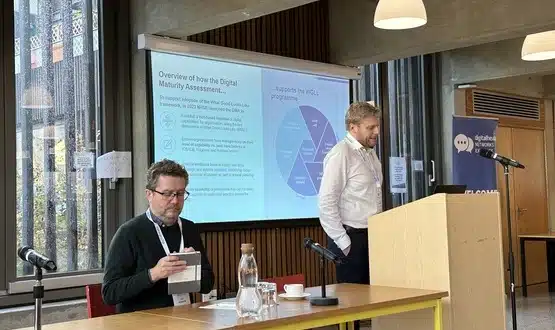
In a presentation at the latest Digital Health Networks Exchange event in London, ‘Unlocking digital maturity in healthcare – levelling up for success’, Will Goodwin, assistant director of programmes – digital capability at NHS England, presented the findings from the inaugural year of the DMA programme.
Although 90% of trusts now have an EPR in place, just 10 to 30% of those have functions such as integrated prescriptions and record sharing with citizens and other hospitals.
Similarly, although 70% of ICSs have now introduced electronic bed management systems, fewer than 40% reported that they were seeing benefits.
One in five providers also lack gaps in basic infrastructure, including fast network connectivity Wi-Fi access, the presentation showed.
The 2023 Digital Maturity Assessment (DMA) programme, commissioned by NHSE in July 2022, enabled the tracking of year-on-year improvements in digital maturity across the NHS.
Goodwin said the DMA results highlight “pockets of best practice” which can be used as blueprints to scale adoption of key capabilities across the NHS. There has been a significant increase in the growth of digital roles and leadership, he said, with most systems now having a CIO equivalent.
He also pointed to specific examples, such as Newcastle’s work in population health, Cornwall and Devon’s implementation of a single EPR system across five acute trusts in the two ICSs, and Greater Manchester’s continuing role as the centre of pilots for the current DMA.
The DMA results from year one have revealed five potential priority areas across themes that could lead to improved health outcomes and economic value:
- Establish basic infrastructure and standards
- Deploy and build capabilities around clinical systems
- System monitoring and capacity management
- Accelerate digital front door(s) for patient engagement and self-service
- Drive population health at scale
Goodwin confirmed the DMA “will be going a bit deeper” in terms of information collection for year two, with more questions included for organisations to respond to, including an expanded AI section.
He said we “need to use the DMA as an enabler” and must ensure it does not simply become a tick box exercise.
Also speaking in the first session of the day was Luke Readman, regional director of digital transformation, London region at NHS England. He said it is a “mixed picture” in London in terms of digital maturity, but all four acute trusts in the Northwest of the capital are using the Oracle Health Millennium EPR, a sign of “moving towards convergence”.
Readman confirmed that 95% of organisations in London are connected to the London Shared Care Record with 1.7 million uses per month by 100,000 unique professionals.