NICE recommends AI skin cancer detection system for NHS use
- 1 May 2025


- An AI system that detects potential skin cancer has been conditionally recommended by NICE for use in the NHS
- The technology from Skin Analytics is aimed at reducing wait times by triaging patients with suspicious skin lesions
- It will be used in the NHS for the next three years while further evidence is collected
An AI system that detects potential skin cancer has been conditionally recommended by the National Institute for Health and Care Excellence (NICE) for use in the NHS.
Deep Ensemble for Recognition of Malignancy (DERM), developed by Skin Analytics, analyses images to assess and triage skin lesions, potentially redirecting benign cases to non-urgent pathways.
The technology, which aims to reduce waiting times by triaging patients with suspicious skin lesions, will be used in the NHS for the next three years while further evidence is collected.
Dr Anastasia Chalkidou, healthtech programme director at NICE, said: “This recommendation represents an important step forward in our approach to evaluating AI technologies in healthcare, driving innovation into the hands of health and care professionals to enable best practice.
“DERM has shown promising results in its ability to accurately distinguish between cancerous and non-cancerous skin lesions, with evidence suggesting it could halve the number of referrals to dermatologists within the urgent skin cancer pathway while maintaining patient safety.
“DERM is an example of how we can harness AI to benefit both patients and healthcare professionals.
“Our evaluation shows this technology maintains diagnostic accuracy while reducing the burden on specialist dermatology services. By implementing this system within existing pathways, we can ensure patients get the right care more quickly.”
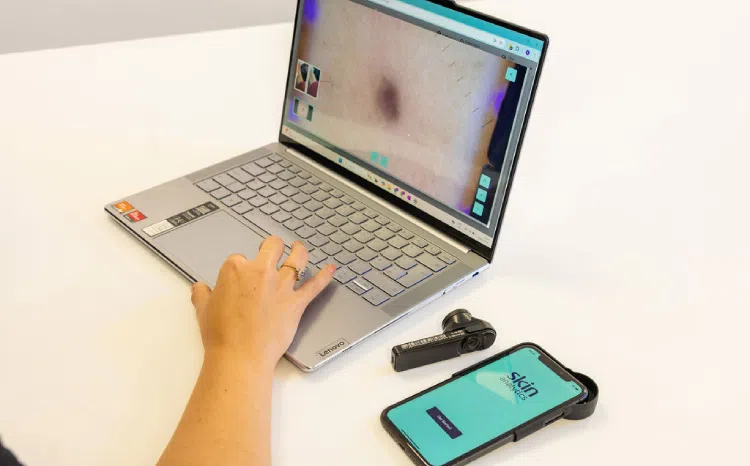
Healthcare staff use a smartphone with a dermoscopic lens attachment – a high-quality magnifying lens used to examine skin lesions – to take images of suspicious skin lesions.
After a patient has been referred from primary care into a teledermatology service the skin lesion can be remotely assessed, diagnosed or monitored without requiring a physical in-person visit. These images are then uploaded to DERM’s online platform.
DERM uses an algorithm to analyse the images, examining visual characteristics and comparing them to its bank of images of known skin conditions.
When suspicious lesions are found the patient can be directed to a human dermatology specialist for further investigation while people with other skin conditions are reassured and offered advice.
Dr Vin Diwakar, NHS national director of transformation, said: “We know that AI is vital for the NHS to deliver reduced waiting times and faster diagnoses for patients, which is why the health service plays such a vital role in supporting technologies like DERM by funding pilots and research, which can then be put forward to NICE for consideration.
“We welcome this recommendation, and we are excited to support further evidence gathering over the next three years.”
Once the evidence generation is complete, a NICE committee will reconsider the evidence and publish new guidance. The latest guidance is available here.
Skin Analytics recently secured £15 million in Series B funding to expand its AI skin cancer technology to other key markets with dermatologist shortages, such as Europe and Australia.
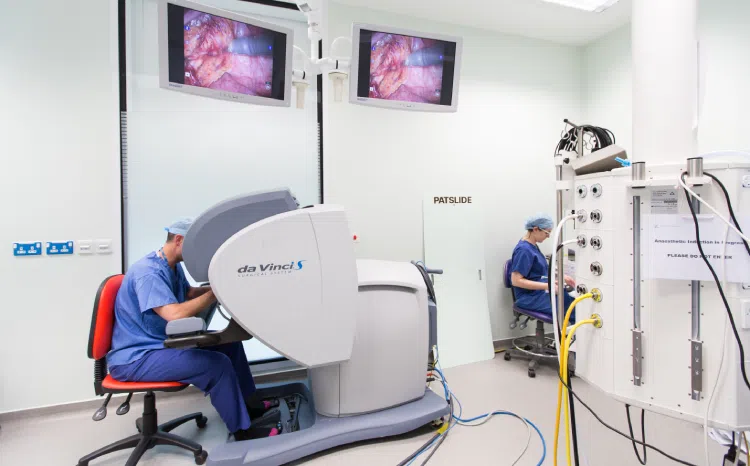
Meanwhile, in April 2025, NICE approved the use of 11 robotic surgery systems in the NHS to help transform care for thousands of patients undergoing soft tissue and orthopaedic procedures.